SUPPORT
Post-Install Handover: Educating Your Pool Equipment Customers
Turn your new equipment installations into long-term client loyalty by mastering the post-install handover process.
Industry
Post-Install Handover: Educating Your Pool Equipment Customers
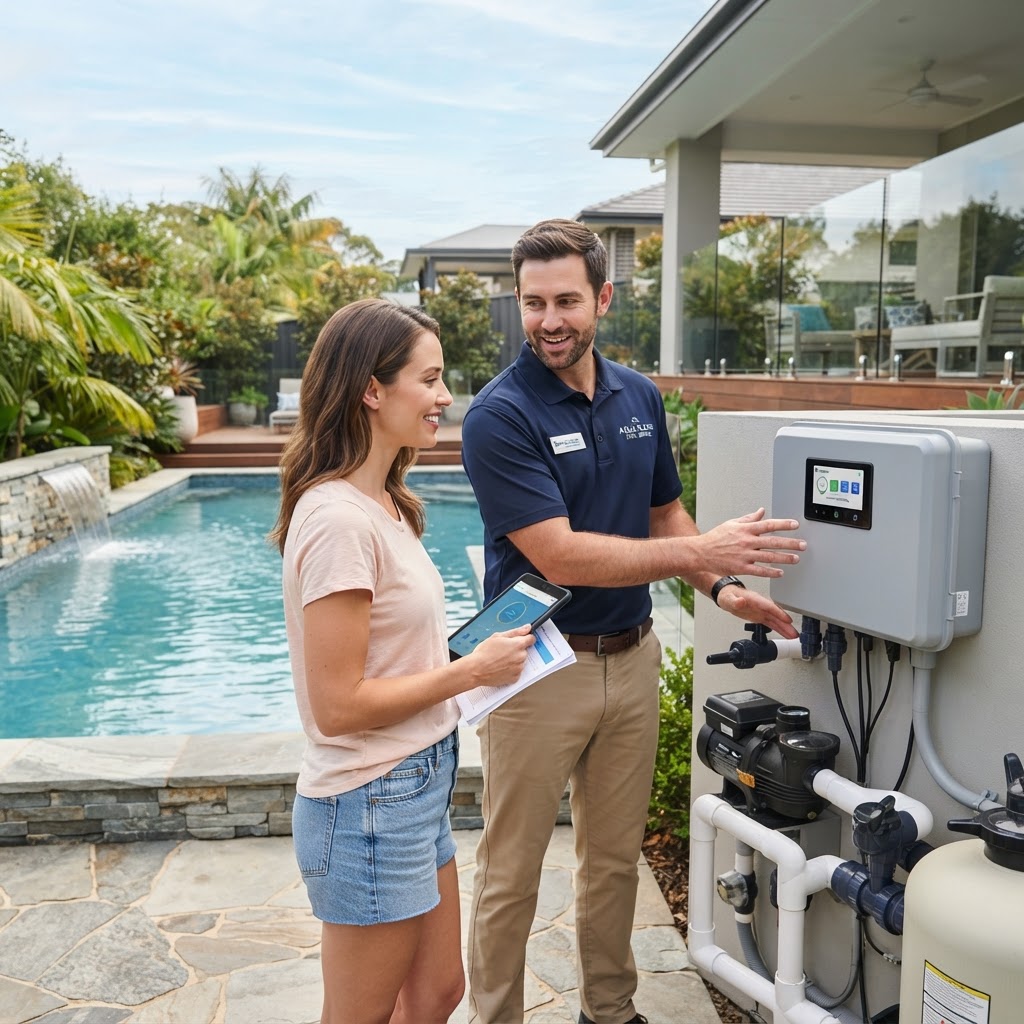
The moment you finish the final plumbing connection, the real test begins. You have installed top-tier technology, but if the customer doesn't understand how to interact with it, your reputation for quality will suffer when they inevitably call with 'broken' equipment that is simply misunderstood. A structured handover is your best defense against avoidable service calls and your strongest asset for building customer trust.
Master the App-Based Control Center
Modern equipment is only as good as the interface used to manage it. If you have installed an Illuminex system, the customer needs to know that the mobile app is the command center for their entire backyard. Walk them through the initial pairing process while they watch. Do not just hand them the equipment and walk away; make them tap the screens themselves. Show them how to navigate from the pump status to the lighting settings. Most homeowners will struggle with setting schedules, so walk through a 10-hour filtration cycle setup in real-time. If they see how simple it is to toggle from 'Efficiency Mode' to 'Boost Mode' for a party, they are significantly more likely to use the features they paid for instead of complaining about 'confusing software.'
Translate Error Codes to Actionable Steps
Nothing triggers a frantic middle-of-the-night phone call faster than a flashing red light on a control panel. Teach your customers that these lights are not always signs of a disaster. Create a simple 'red light, green light' logic for them. If a salt chlorinator displays a low-salt warning, show them where the test strips are and how to check the water chemistry before they pick up the phone. Explain the difference between a flow error—which could just be a dirty filter—and a hardware error that requires a professional. By giving them a basic diagnostic sequence, you empower the homeowner while simultaneously filtering out service calls that you honestly don't have time to handle.
Establish a Cleaning and Maintenance Routine
Even with the latest robotic cleaners like the AquaDive, the pool still requires human input. Explain the 'why' behind the 'what.' If you installed a new filter, show them exactly where the pressure gauge should sit when the system is clean. Give them the golden rule: 'If the gauge reads 8-10 PSI above the clean starting pressure, it is time to backwash or clean the cartridge.' This simple rule saves your customers from burnt-out pumps caused by restricted flow. If they are using automated equipment, remind them that sensors still need a physical cleaning every month to stay accurate. Provide them with a calendar or a digital reminder template so they know exactly which tasks are theirs and which are reserved for your professional visits.
Walk Through the 'Off-Season' Transition
Homeowners often panic when the temperature drops. If you are in a region that requires winterization, spend the last part of your visit showing them the specific valves to close or the drain plugs to pull. Do not just do it for them. Let them touch the valves and label them with permanent markers. If you leave a system that is confusing to shut down, you are inviting freeze damage that will result in a claim against your work. Clearly label 'Bypass,' 'Return,' and 'Waste' positions. A well-labeled plumbing setup is the mark of a professional, and it is the single most effective way to ensure a smooth equipment restart come spring.
The Handover Checklist: A Quick Reference
Leave your customers with a physical or digital copy of a handover checklist. This prevents them from forgetting the details they were too overwhelmed to absorb during the installation day. Your checklist should include these five essential items:
-
The Baseline Pressure: Write down the clean filter pressure in permanent ink on the filter tank.
-
App Login Details: Ensure they have their account credentials saved and biometric login enabled.
-
Maintenance Intervals: A bulleted list of monthly (e.g., check basket), quarterly (e.g., cartridge cleaning), and seasonal tasks.
-
The 'Emergency Stop' Procedure: Show them exactly how to cut power to the entire pad in the event of a leak.
-
Preferred Contact Method: Clearly define how they should reach you for non-emergency questions versus urgent service requests.
By systematizing your handover, you shift from being a 'vendor' to a 'consultant.' When the customer feels informed, they feel in control. And when they feel in control, they stop viewing the equipment as a source of stress and start viewing it as the luxury investment it was intended to be.